
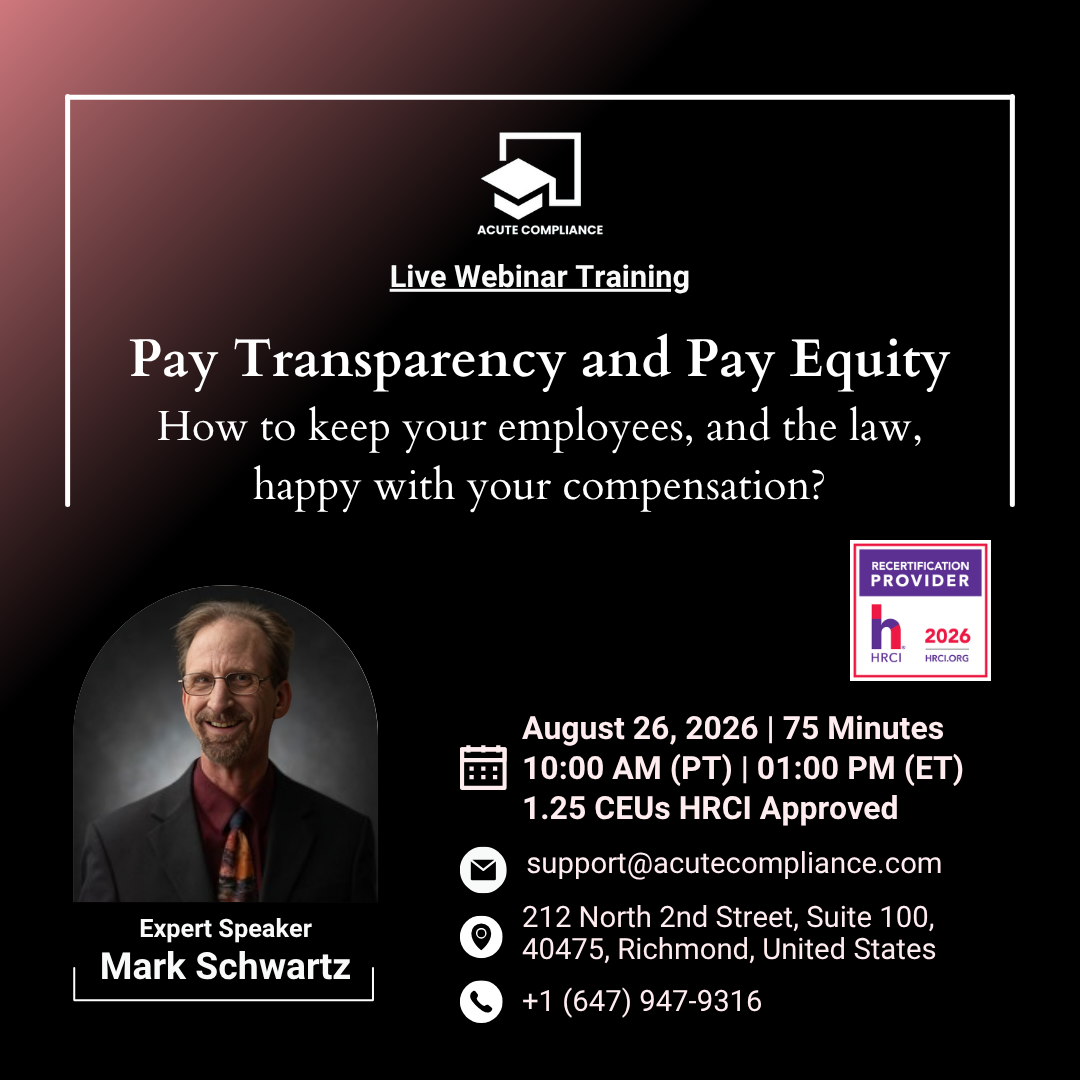
Pay transparency refers to the practice of disclosing compensation-related information to employees, job applicants, or the public. This can include details such as salary ranges, benefits, and wage changes due to promotions. Recently, many states and local jurisdictions have enacted pay transparency laws that require employers to disclose wage information to prospective candidates and current employees. These laws aim to address pay equity and ensure that employees can discuss salaries freely, promoting fairness in the workplace.
Pay equity is the legal concept that equal work deserves equal pay regardless of an employee’s race, gender, ethnicity, age, religion or other non-job-related factors. This means employees who perform the same or similar jobs should receive equal pay. Pay equity is important because it helps ensure that all employees are treated fairly by eliminating wage discrimination, which helps promote diversity and inclusion in the workplace.
The Federal Government has no specific pay transparency law. However, over the past several years, most every state has some version of employer regulation over pay transparency. Many states enacted laws in 2026. The Federal Governments Equal Pay Act and Lily Ledbetter Act set minimum standards for pay equity. States also have their own pay equity legislation.
So ask yourself:
- Have I kept current on my state(s) pay equity and pay transparency laws?
- Do I understand the Equal Pay Act and Lily Ledbetter Fair Pay Act? What are their important differences? What states enacted other measures to their laws?
- Do I understand the benefits and pitfalls to enacting pay transparency and pay equity into our business?
- How can I enact measures to effectively implement pay equity and transparency into our business and HR culture?
- How do I talk to employees about our company’s pay equity and transparency?
So Join Mark Schwartz in this informative webinar to be up to date on industry standards and compliance.
Session Highlights:
- Pay Transparency:
- Its goals and benefits to your company, including company culture:
- Employee Retention
- Stronger recruiting efforts
- It’s possible negative effects on your employees and HR
- Negotiations,
- Implementation Issues,
- Poaching
- The four steps for implementing Pay Transparency:
- Conducting a pay audit,
- Delivering transparent communication,
- Fusing Pay transparency into the work culture,
- Goals and progress reports
- State and local laws:
- General requirements under all State regulations,
- State and local specific laws from California, Colorado, Connecticut, Hawaii, New York and more
- Its goals and benefits to your company, including company culture:
- Equal Pay:
- The Equal Pay Act of 1963 – Demands equal pay for work based on
- Skill
- Effort
- Responsibility
- The Lily Ledbetter Fair Pay Act of 2009- addresses whena claim of unequal pay based on sex can be filed
- Example of claims
- Limitations
- Impact on Employers
- The Importance of Compliance with Equal Pay Laws and Best Practices
- How to discuss pay equity with employees
- Key Discussion Points in Interviews, Hiring and During Employment
- Answering Common Employee Questions
- State Equal Pay Regulations
- General Rules for All States
- Expanded Rules for California, New York and Maryland
- Other states with unique rules.
- The Equal Pay Act of 1963 – Demands equal pay for work based on
Why You Should Attend:
Who Will Benefit:
- HR Managers
- Payroll Managers
- Budget Personnel
- HR and Payroll Compliance Managers
- Department Managers.
 1.5 CEUs/RCHs


Reviews
There are no reviews yet.